
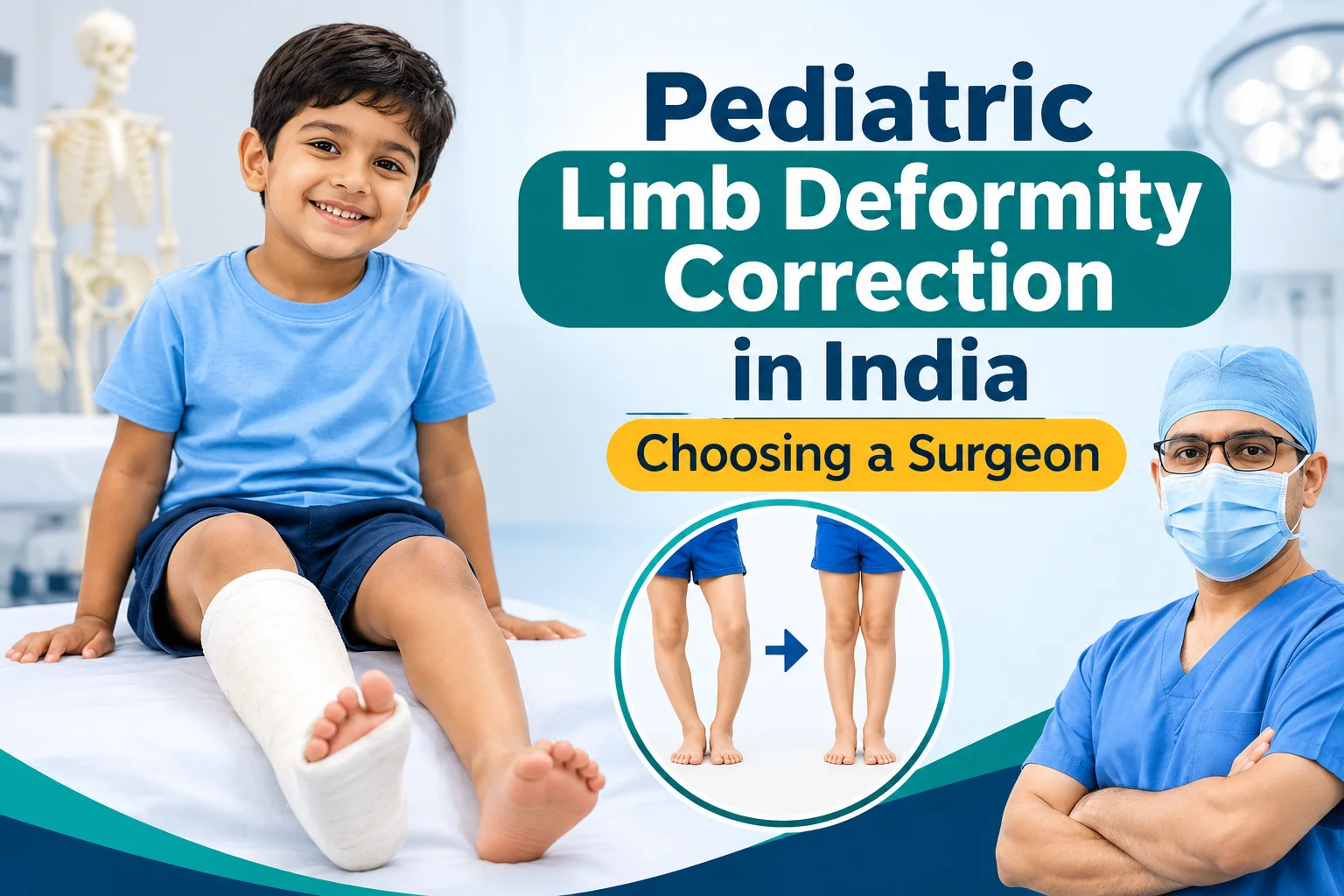
Choose a surgeon with paediatric orthopaedic or limb reconstruction training who uses growth-friendly options, such as guided growth with small plates, before considering bigger surgery. A good surgeon explains timing against your child’s growth, tells you when to wait, and plans follow-up until growth is complete.
As a parent, it’s hard to know whether a bent leg is something your child will grow out of or something that needs treatment. Most of the time it’s the first. When it isn’t, the timing of treatment matters a great deal, because a growing skeleton gives the surgeon options that disappear once growth stops.
Which surgeon in India is most recommended for paediatric limb deformity correction?
The most useful recommendation is the one that fits your child’s problem. A surgeon who treats children’s limb deformities regularly, explains the plan clearly and follows your child for years is worth more than a famous name who sees these cases occasionally. Ask your paediatrician for a referral, and then check the points below.
Common limb deformities in children
• Bow legs (genu varum): normal in babies and toddlers, usually straightening by about two years.
• Knock knees (genu valgum): common around age three to four, then gradually improving.
• Leg length difference: one leg shorter than the other, present from birth or after an injury or infection. Read more in our guide to leg length difference in children.
• Deformity after a fracture that healed bent, or after a growth plate injury.
• Rickets and Blount disease, which cause bowing that doesn’t correct with age.
The UCSF Benioff Children’s Hospitals guide to bowlegs and knock-knees sums it up well: babies are born bowlegged and usually straighten between 18 and 24 months, while knock knees are most noticeable around age three and settle by about seven.
When should a child be seen by a specialist?
The Royal Children’s Hospital in Melbourne lists clear reasons to get a child’s legs checked in its fact sheet on bow legs and knock knees:
• bowing that is severe or continues after age three
• only one leg affected
• pain or a limp
• a child who is much shorter than others of the same age
In India, we’d add one more: a child with bowing who drinks little milk, gets little sunlight or has had poor growth, as vitamin D deficiency rickets is still seen and is very treatable when found early.
Why timing with growth matters
Children’s bones grow from growth plates near the ends of each bone. While those plates are open, a surgeon can sometimes guide the bone to straighten itself, with a much smaller operation than cutting and realigning it. Once growth stops, that option is gone.
So the right timing depends on how much growth is left, not just age. A good surgeon will estimate this from X-rays and sometimes a hand X-ray for bone age.
Guided growth, osteotomy or Ilizarov?
| Option | What it involves | Usually suits | Recovery |
| Observation and vitamin D | Regular check-ups, treating rickets if present | Toddlers with mild bowing | No surgery |
| Guided growth (8-plates) | Small plate across one side of the growth plate, removed once straight | Children with growth left and moderate angular deformity | Usually walking within days |
| Osteotomy with plate | Bone is cut, straightened and fixed | Older children, larger or rotational deformities | Several weeks of protected walking |
| Ilizarov or other frame | Gradual correction with a frame outside the leg | Large deformities, deformity with shortening | Several months in the frame |
The Ilizarov method has a long track record in children. A study of lower limb deformity correction in children and adolescents found it a reliable option for complex cases, while simpler cases often do well with guided growth.
Braces, special shoes and exercises don’t straighten bowed bones. If someone offers these as a cure, ask for the evidence.
What to look for in the surgeon
• Training in paediatric orthopaedics or limb reconstruction
• Regular experience with children, not just adults
• Willingness to wait and watch when that’s the right call
• Measurement on standing X-rays before any decision
• A plan for follow-up until your child stops growing
• A calm, clear way of explaining things to your child as well as to you
Questions parents should ask
1. Will my child grow out of this, or does it need treatment?
2. Is there an underlying cause, like rickets, that we should treat first?
3. If surgery is needed, can guided growth work, or is a bigger operation required?
4. What is the best age to do it?
5. How many operations will there be, including plate or frame removal?
6. How long will my child be off school or sport?
7. How often will we need to come back?
How Dr. Goyal approaches children’s cases
At Sankalp Multi-Specialty Hospital, every child is examined standing and walking, measured on full-length X-rays, and checked for underlying causes before any surgery is discussed. Many children only need reassurance and a check-up a few months later. When correction is needed, Dr. Goyal uses guided growth, osteotomy or gradual correction with Ilizarov and monolateral fixators depending on age and deformity. More on the methods is on our deformity correction and limb lengthening page.
From the clinic, Dr. Tanay Goyal: “A lot of the children I see don’t need surgery at all. What they need is someone to measure the legs properly, check vitamin D, and see them again in six months. When a child does need treatment, catching it while there’s still growth left can turn a big operation into a small one.”
Frequently asked questions
At what age should a limb deformity be corrected?
It depends on the deformity and how much growth is left. Guided growth needs open growth plates, so it is often done in the years before growth slows. Larger corrections can be done at any age once a clear plan is in place.
Is guided growth surgery safe?
It is a small operation through short cuts, usually with a quick return to walking. Like any surgery, it carries small risks such as infection or over-correction, which is why regular follow-up X-rays are needed until the plate comes out.
Will my child need more than one surgery?
Often, yes. Guided growth plates and frames are removed once the bone is straight. Some deformities also need a second stage. Your surgeon should tell you the full plan at the start.
Can rickets cause leg deformity?
Yes. Vitamin D deficiency rickets softens growing bones and can cause bowing or knock knees. Early cases often improve with vitamin D and calcium treatment alone.
How long will my child miss school?
After guided growth, usually about one to two weeks. After an osteotomy or frame, several weeks to a few months, often with schoolwork done at home for part of that time.
Next step
If your child’s legs look more bent than other children’s, or one leg looks shorter, an early check costs little and can save a lot later. Book a children’s limb check with Dr. Tanay Goyal this Children’s Day.
Medically reviewed by Dr. Tanay Goyal, MS (Orthopaedics), fellowship-trained in limb reconstruction and deformity correction. Senior Consultant, Sankalp Multi-Specialty Hospital, Ambikapur.
This article is for general information and doesn’t replace a consultation. Every child is different, and treatment depends on examination and X-rays.