
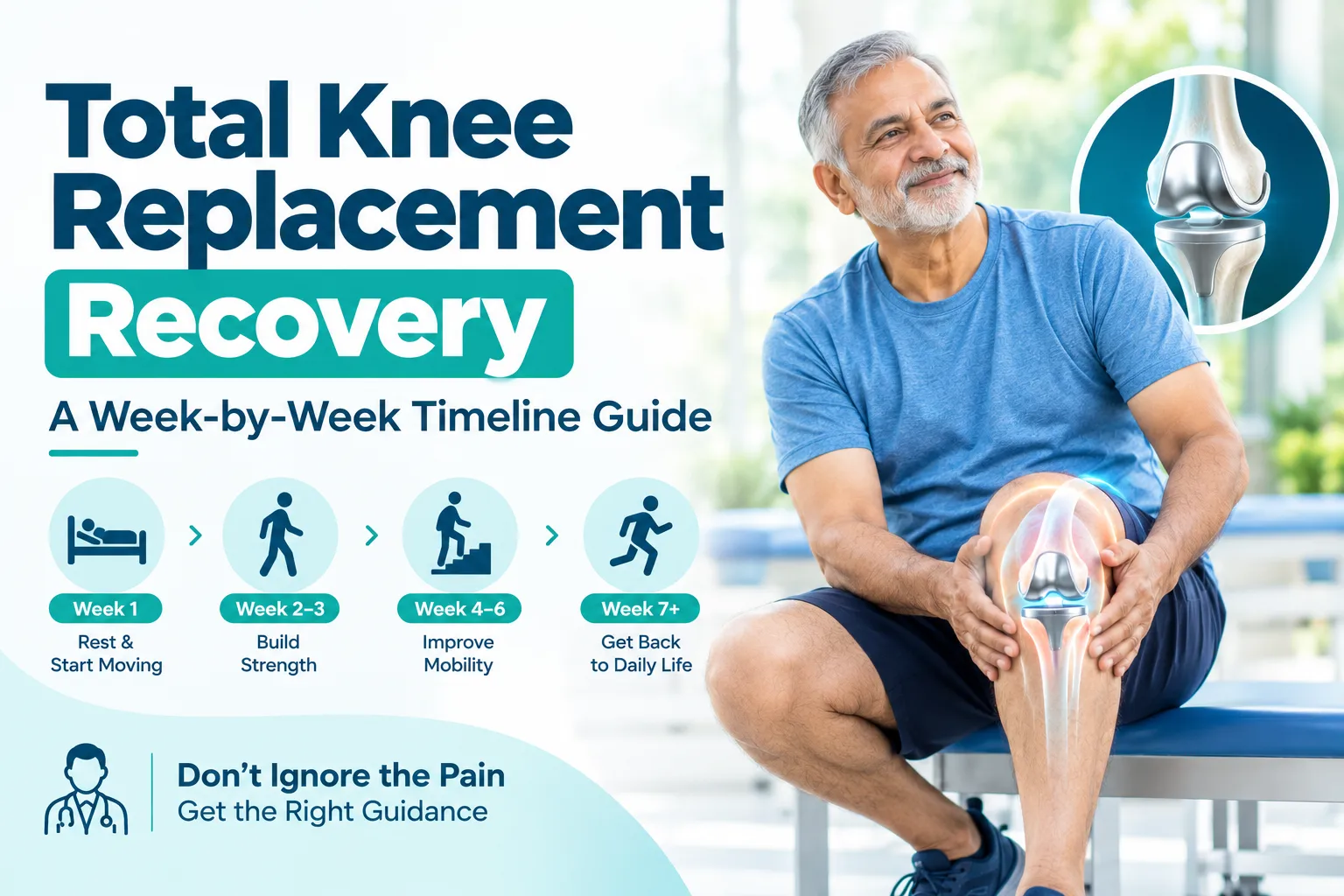
Most patients are walking with support within 24 hours of a total knee replacement, managing most daily activities independently by six weeks, and feeling close to fully recovered somewhere between three and six months. Full, final recovery — including the last improvements in strength and flexibility — can continue for up to a year, which surprises people who expect to feel “done” the moment the six-week mark passes.
Total knee replacement is genuinely one of the most successful procedures in orthopedic surgery, with more than 700,000 performed annually in the U.S. alone, according to figures from the American Academy of Orthopaedic Surgeons. But successful surgery is only half the outcome — how the recovery is managed determines the other half, and that’s the part patients have real control over.
Before we get to the timeline: what recovery actually depends on
No two patients follow the exact same schedule. Your starting fitness level, how consistently you do your physical therapy exercises, your age, and whether you have other health conditions like diabetes all affect how quickly you move through the stages below. What follows is a realistic general guide, not a guarantee — think of it as what to expect on average, not a deadline to hit.
Days 1–3: Hospital stay and first steps
Most patients stay in the hospital for one to three days after surgery. Within the first 24 hours, you’ll typically be helped out of bed and encouraged to take a few steps with a walker — earlier mobilization genuinely speeds up recovery and reduces complication risk, so this isn’t rushed for the sake of convenience. You’ll be discharged once you can get in and out of bed, walk a short distance with support, and bend your knee to roughly 90 degrees.
Week 1–2: Settling in at home
This stage is about managing pain and swelling while steadily increasing what you can do independently. By about ten days post-surgery, most patients can bend their knee 90 degrees and extend it fully, stand with little or no help, and manage daily tasks like bathing and dressing on their own. Home physical therapy or outpatient sessions usually begin during this window — skipping or minimizing these early sessions is one of the more common reasons recovery ends up slower than it needed to be.
Weeks 2–6: Building strength and independence
By the two-to-three week mark, the knee is typically strong enough to bear more weight, and most patients transition from a walker to a cane, or drop assistive devices altogether. By six weeks, you should notice a genuinely dramatic improvement if you’ve kept up with your exercise program: reduced swelling, better mobility, and most people are able to resume most of their normal daily activities. This is also roughly when many patients feel comfortable driving again, provided your surgeon has cleared you and your reflexes and strength have sufficiently returned.
Months 3–6: Approaching full function
By three months, most patients are around 90% recovered by most functional measures. Walking longer distances, climbing stairs more naturally, and returning to low-impact recreational activities — swimming, cycling, golf — typically become realistic during this window. By six months, the majority of patients report feeling essentially back to normal, with knee flexibility often reaching 120–130 degrees.
Months 7–12: Final improvements and long-term maintenance
The remaining gains during this stage tend to be smaller but still meaningful — continued strength building, and for some patients, gradual resolution of residual mild stiffness or swelling that can still occur after particularly active days. Beyond the first year, the focus genuinely shifts from “recovery” to “maintenance” — regular low-impact exercise like swimming, cycling, or walking helps protect the health and longevity of the new joint. High-impact activities like running or jumping are generally still discouraged indefinitely, since they place more stress on the implant than it’s designed for.
What actually determines whether your recovery is faster or slower
Based on what I see across patients, three factors matter more than almost anything else:
Consistency with physical therapy. This is, without question, the single biggest factor within your control. The surgery gives you a new joint; your rehabilitation work is what determines how well that joint actually functions in daily life.
Getting moving early rather than resting excessively. It feels counterintuitive to some patients that moving soon after surgery is encouraged, but early, appropriate movement genuinely reduces stiffness and speeds functional recovery compared with prolonged rest.
Home preparation before surgery. Something simple but often overlooked: setting up a single-floor living space if possible, securing loose rugs and cords, and arranging help for the first couple of weeks measurably reduces both stress and fall risk during early recovery.
FAQ
How long will I be in pain after knee replacement surgery?
Pain is most noticeable in the first one to two weeks and generally improves steadily from there. Some mild discomfort or swelling, especially after activity, can persist for a few months, but this is different from the acute post-surgical pain of the first couple of weeks.
When can I drive again after knee replacement?
Most patients are cleared to drive somewhere between three and six weeks, depending on which knee was operated on, your reflex response, and your surgeon’s assessment — this isn’t a fixed date, so check with your surgeon rather than assuming based on a general timeline.
Will I need physical therapy for the whole recovery period?
Structured physical therapy is generally most intensive in the first six to twelve weeks, tapering as strength and mobility return. Even after formal sessions end, continuing home exercises supports the long-term outcome of the surgery.
Is it normal to still have some swelling months after surgery?
Yes, mild swelling — particularly after a long day or increased activity — can persist for several months and sometimes longer, and this is considered within the range of normal recovery rather than a sign that something has gone wrong.
Can I return to sports after a total knee replacement?
Low-impact activities like swimming, cycling, walking, and golf are generally encouraged once you’ve recovered sufficiently. High-impact activities like running or competitive jumping sports are typically discouraged long-term, since they place repeated stress on the implant that can shorten its lifespan.
Reviewed by Dr. Tanay Goyal, Orthopaedic Surgeon specializing in primary and revision knee and hip replacement, Sankalp Multi-Specialty Hospital, Ambikapur. If knee pain is affecting your daily life and you’re considering your options, book an appointment, read more about our knee and hip replacement program, or see patient recovery stories from others who’ve been through the process.