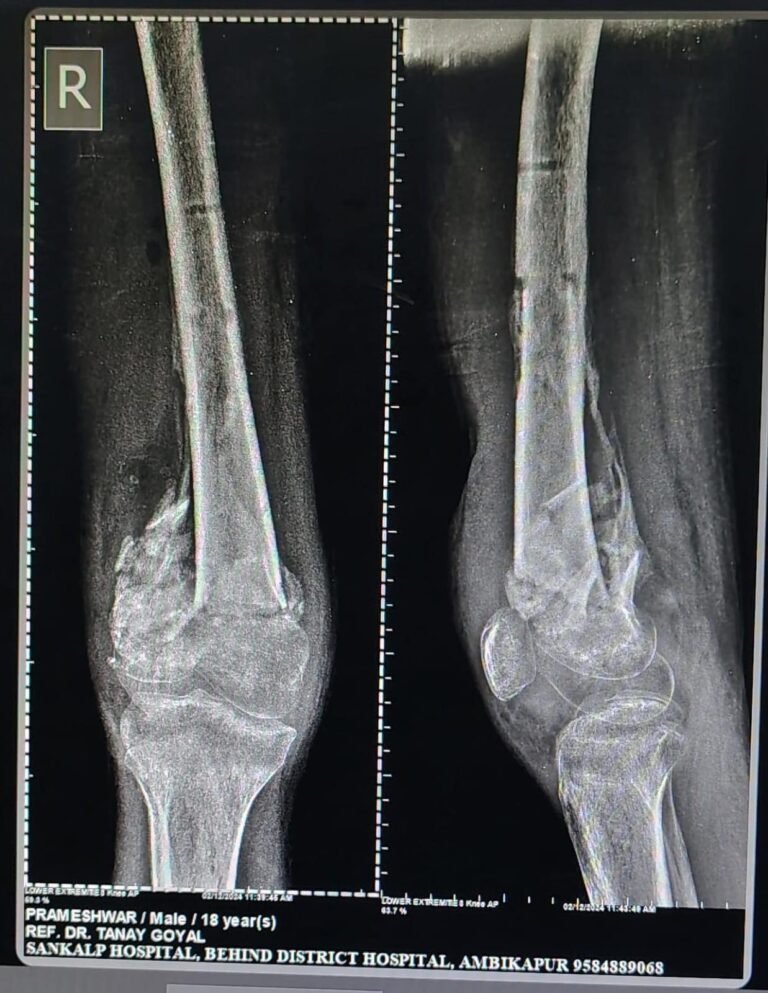
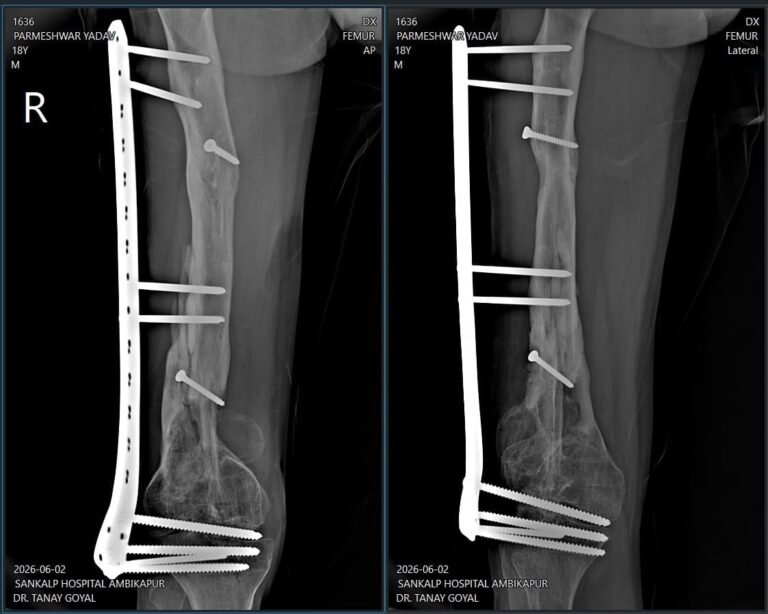
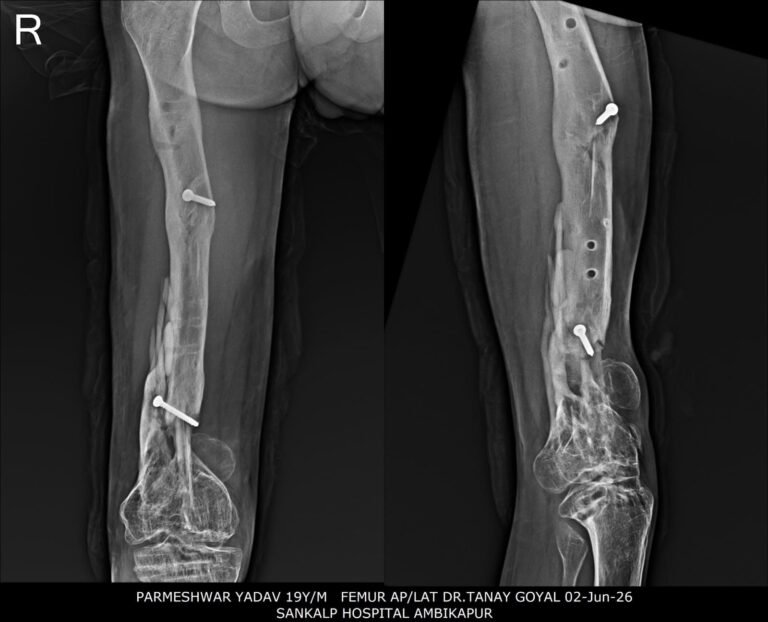
“Some cases stay with you long after the surgeries are over. This is the story of a young boy who came to me at just 17 years old with a severely infected right femur. Today, after a long and difficult journey involving multiple stages of reconstruction, he doesn’t merely walk independently — he rides his bike more than 120 kilometres from his village to Ambikapur to come and visit me.
Before coming to me, his family had already consulted doctors at more than three hospitals, including centres in Raipur and Nagpur. The opinion they repeatedly received was devastating: because of the severity of the infection, amputation might be necessary. When he arrived in Ambikapur, the situation was indeed extremely challenging — severe infection involving the femur, continuous foul-smelling discharge, and a major threat to the survival of the limb. I couldn’t promise the journey would be easy, but I gave him an assurance: we would do everything reasonably possible to try and save his limb.
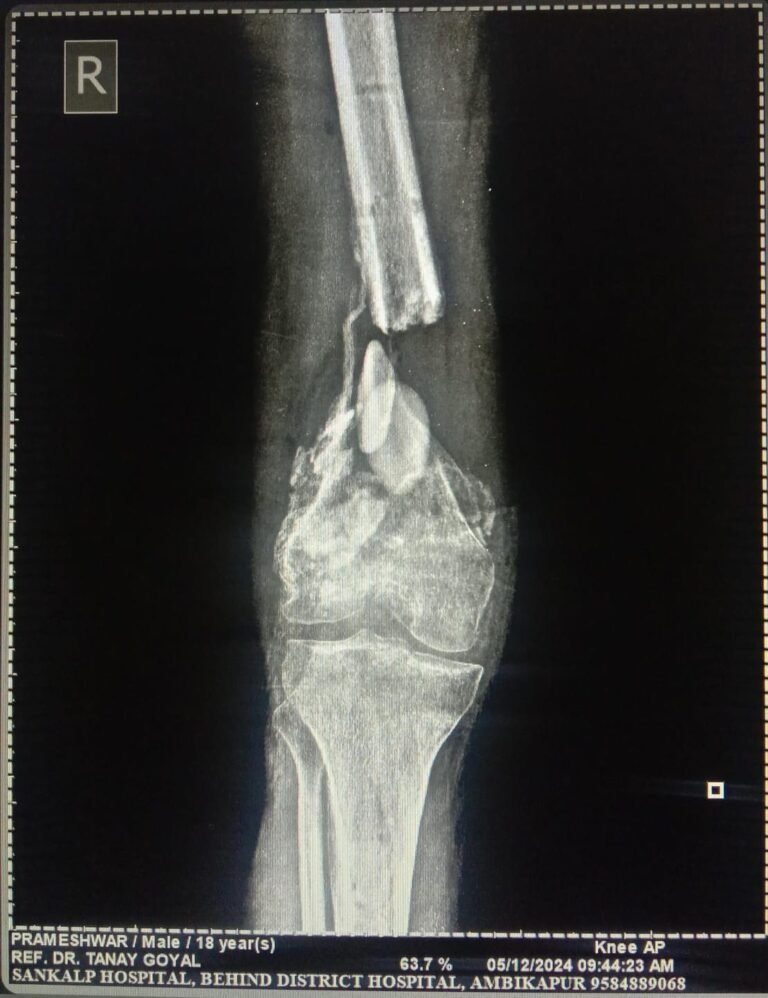
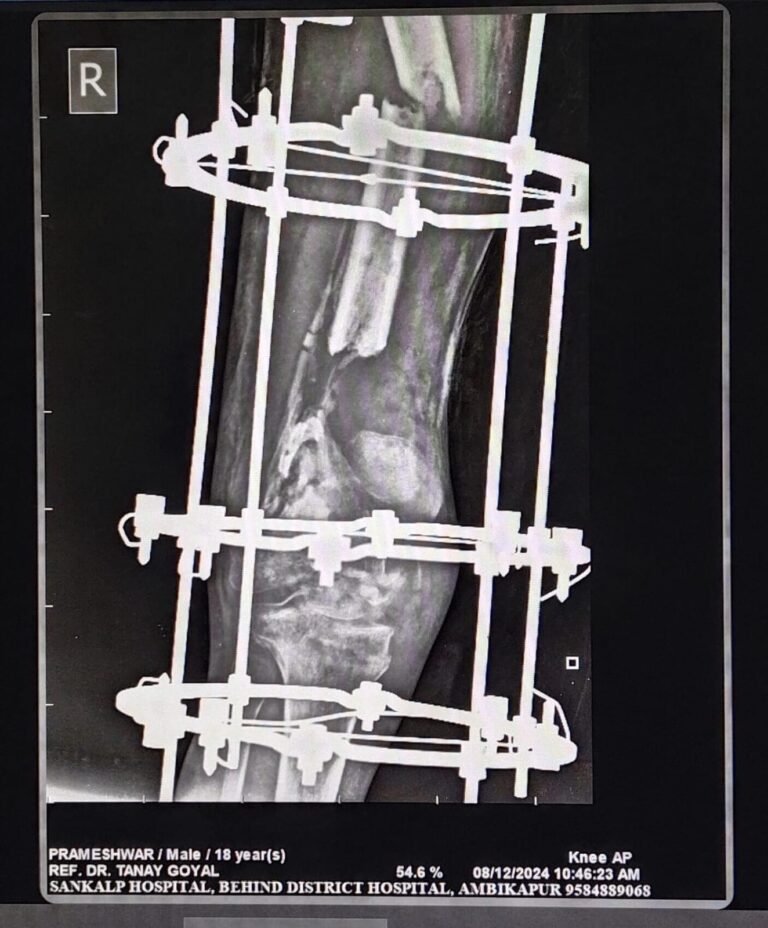
The first step was infection control — thorough surgical debridement, with a considerable amount of infected femoral bone removed, followed by antibiotic-loaded bone cement to manage the resulting defect. About a month later, we proceeded with an Ilizarov ring fixator and bone transport, to gradually regenerate bone across the gap. But the frame was difficult for him to tolerate over time, and he eventually asked not to continue with it — a reminder that a patient’s comfort and willingness to continue matter as much as the technique itself.
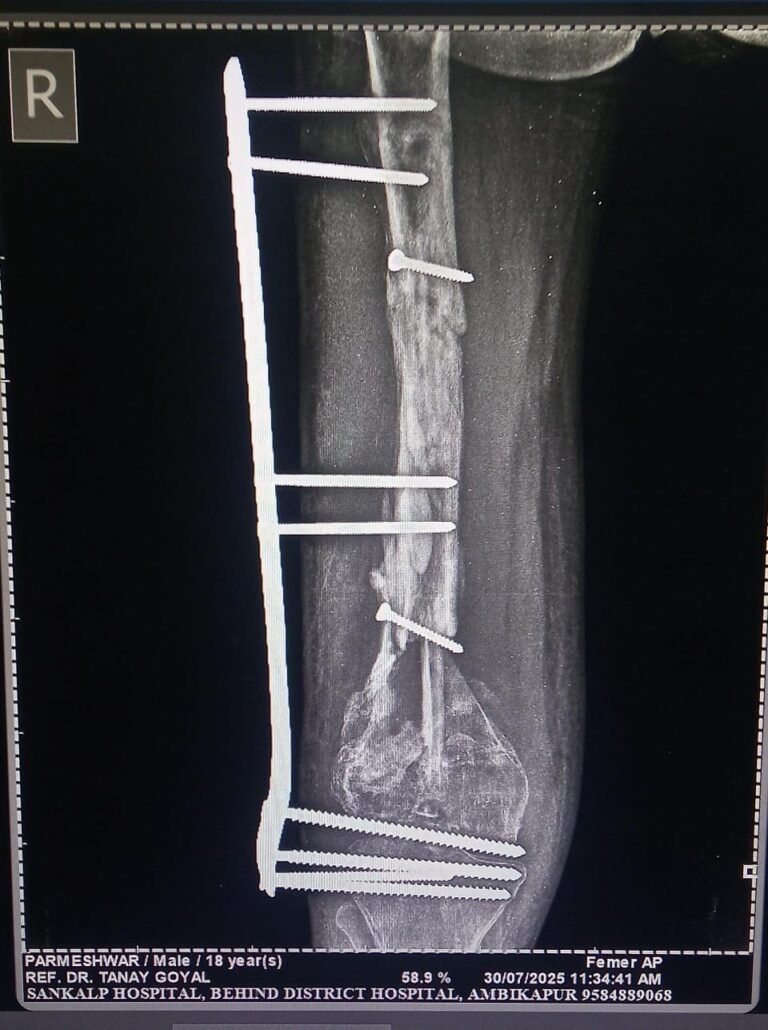
We changed strategy: removing the Ilizarov fixator in favour of an external locking plate using extracutaneous plate osteosynthesis, combined with fibular bone grafting. Within about three months, the femur had united. Roughly a year after the first surgery, the fixation was finally removed.
Today, this young man walks independently — and rides his motorcycle more than 120 kilometres whenever he gets the chance, just to visit and say thank you. Not every severely infected limb can be saved, and amputation is sometimes the safest option. But this case is a reminder that a severely infected limb deserves careful evaluation before that decision is made.”
Patient identity withheld to protect privacy. Published with the patient’s consent, for informational purposes only — individual results vary, and amputation remains the appropriate choice in some cases.